Sodatide Blog
Is 211 mg of Inulin Enough? Sodatide Doses vs Research
Quick answer
No, not by research standards. One Sodatide capsule has 211 mg of chicory inulin, about 1.3% to 1.8% of the 12 to 16 g a day used in studies. The 100 mg of potato starch is about 0.3% of the studied 30 g. The probiotic count is not published, so it cannot be compared.

Every Sodatide capsule lists its fiber in milligrams. Most fiber studies count in grams. That one-letter change hides a big gap, and this post puts real numbers on it.
Label
What does one Sodatide capsule actually hold?
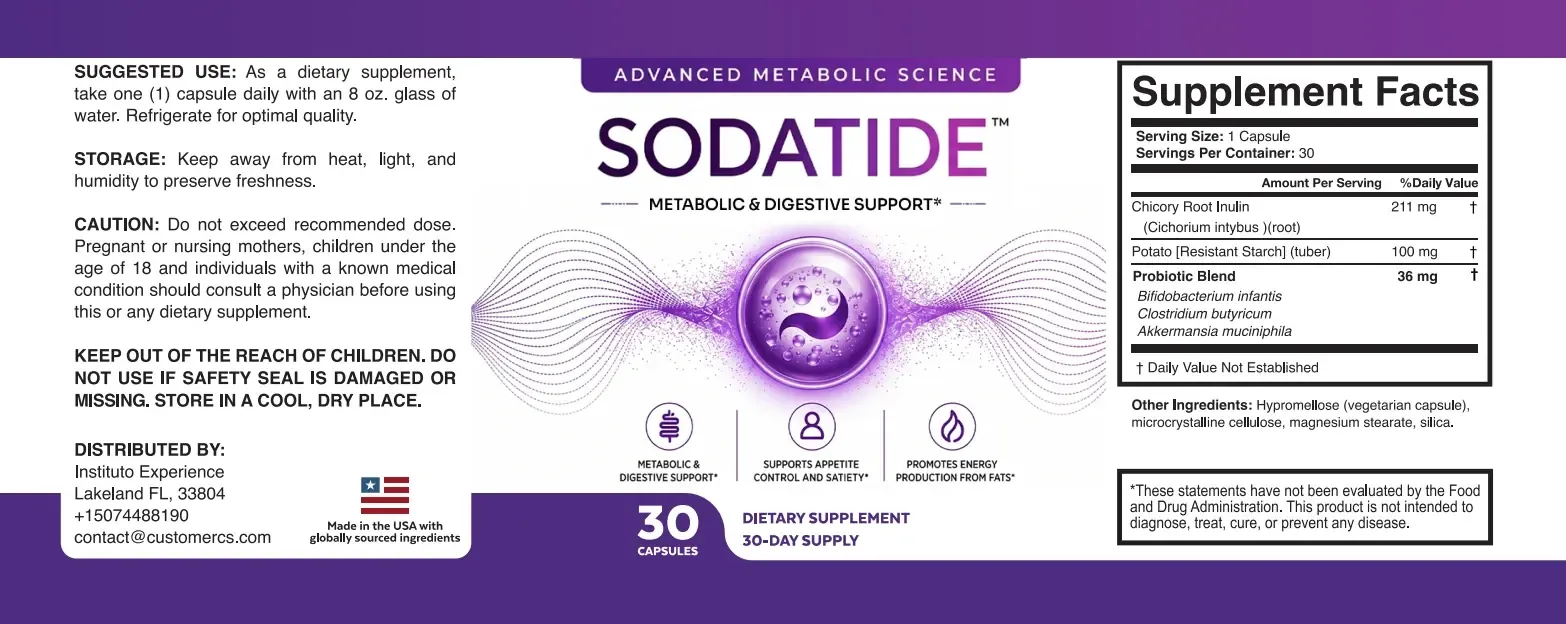
One Sodatide capsule holds 347 mg of active ingredients. That is 211 mg of chicory root inulin, 100 mg of potato resistant starch and a 36 mg probiotic blend. The label sets the dose at one capsule a day, so those are also the daily amounts.
- Chicory root inulin
- 211 mg, or 0.211 g
- Potato resistant starch
- 100 mg, or 0.1 g
- Total fiber from actives
- 311 mg, about one third of a gram
- Probiotic blend
- 36 mg by weight, CFU not published
- Daily dose on the label
- 1 capsule with an 8 oz. glass of water
You can read each line in full on the Sodatide Supplement Facts page.
Inulin
How much inulin did the human studies use?
The daily inulin-type fiber studies we checked used 12 to 21 grams a day. Sodatide gives 0.211 grams. So the capsule supplies roughly 1% to 1.8% of the amounts people took in those trials.

Bowel habits: 12 g a day
Adults with mild constipation took 12 g of chicory inulin daily for 4 weeks. Stool frequency went from 3.0 to 4.0 a week, and stools got softer (Micka et al., 2017). One Sodatide capsule is about 1.8% of that amount.
Fullness: 16 to 21 g a day
Two studies used oligofructose, a shorter form of the same fiber family. At 16 g a day, people felt fuller and ate about 5% fewer calories (Cani et al., 2006). At 21 g a day for 12 weeks, hunger and fullness hormones moved in a helpful direction (Parnell & Reimer, 2009).
Comfort: up to 10 g
A tolerance test found native inulin was well tolerated up to 10 g, with mild gas and bloating (Bonnema et al., 2010). That is useful context: gas at low doses is possible, but 211 mg is far below where most people notice it.
Starch
How far is 100 mg of potato starch from the studied dose?
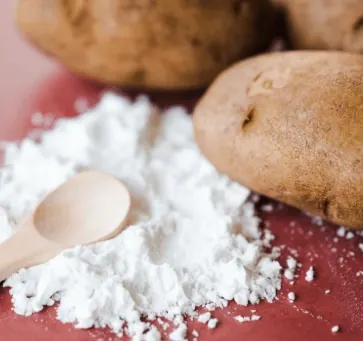
Potato resistant starch is the weakest ingredient on paper. Studies on it used 30 g a day, and Sodatide gives 0.1 g. That is about 0.3% of the tested amount, or roughly 1/300.
Studies on potato starch
Adults over 70 who took 30 g a day for 12 weeks had better glucose and insulin numbers, while mid-age adults saw no change (Alfa et al., 2018). In young adults, 30 g a day for 6 weeks changed stool frequency with only one of the starches tested (Dahl et al., 2016).
Studies on other resistant starch
Maize-based resistant starch at 15 and 30 g a day raised insulin sensitivity in men, not women (Maki et al., 2012). Another trial used 40 g a day for 12 weeks (Johnston et al., 2010). Those doses are 150 to 400 times the Sodatide amount.
Side by side
Sodatide doses vs research: the side-by-side table
Here is every active ingredient next to a daily dose from a human study. The last column shows how many capsules it would take to match that dose. It is there to show scale, not as advice.
| Ingredient | Sodatide per capsule | Daily dose in the study | Share of studied dose | Capsules to match |
|---|---|---|---|---|
| Chicory root inulin | 211 mg | 12 g (Micka et al., 2017) | about 1.8% | about 57 |
| Chicory root inulin | 211 mg | 16 g (Cani et al., 2006) | about 1.3% | about 76 |
| Potato resistant starch | 100 mg | 30 g (Alfa et al., 2018) | about 0.3% | 300 |
| Akkermansia muciniphila | Part of 36 mg | 10 billion cells (Depommier et al., 2019) | Cannot be compared | Unknown |
| Bifidobacterium infantis | Part of 36 mg | 100 million CFU (Whorwell et al., 2006) | Cannot be compared | Unknown |
| Clostridium butyricum | Part of 36 mg | About 1.9 billion CFU (Sun et al., 2018) | Cannot be compared | Unknown |
Want to judge Sodatide for yourself? Every pack has a 60-day refund window.
Prices from $49 a bottle. Free US shipping on 3 and 6 bottles.
Strains
Why can the probiotic blend not be compared?
The strains are listed by weight, 36 mg for all three together. Probiotic studies count live cells, written as CFU, and weight does not convert into a cell count. Listing CFU on a label is voluntary, and benefits depend on the strain and the amount (NIH Office of Dietary Supplements).
| What we know | What is not published |
|---|---|
| Three species are named on the label | The strain code for each species |
| The blend weighs 36 mg per capsule | How much of the 36 mg each species makes up |
| Studies used 100 million to 10 billion a day | The CFU count per capsule |
| The brand says to refrigerate after opening | Whether the count holds until a best-by date |
We look at the Akkermansia trials in detail in Akkermansia muciniphila explained. For a plain guide to CFU and strain codes, see how to read a gut supplement label.
More capsules
Should you take more capsules to reach the studied dose?
No. Taking more than one capsule goes against the label, and it would not be practical anyway. Matching the 12 g inulin study would take about 57 capsules a day, which is nearly two bottles.
Stay at one capsule
The label dose is one capsule daily with water. The caution panel says not to exceed it.
Get grams from food
Beans, oats, onions, bananas and whole grains carry fiber by the gram. The usual adult target is 25 to 38 grams a day.
Add fiber slowly
If you raise fiber from food, do it over a few weeks. Gas and bloating are the common trade-off.
Talk to a clinician
If you want a clinical fiber dose for a health goal, a doctor or dietitian can set it with you.
Who fits
Who can a small daily dose like Sodatide still suit?
A small dose is not the same as a useless product. It just changes what you should expect. Sodatide fits people who want an easy habit and are curious about the strains, not people chasing a study result.
Pros
- One capsule a day is easy to keep up
- Every fiber amount is printed, so you can check the math
- Three named species that everyday food rarely supplies
- 60 days from purchase to ask for a refund
Cons
- Fiber is about 0.3% to 1.8% of studied doses
- No CFU count for the probiotic blend
- No human study on this exact formula
- Buyer pays return shipping on a refund
If you do try it, the pricing page shows the cost per day for each pack. The 2- and 3-bottle packs fit best inside the refund window.
Verdict
Our verdict: is 211 mg of inulin enough?
Not if you mean the doses used in inulin research. One Sodatide capsule gives about 1% to 2% of those amounts, and the potato starch gives about 0.3%. No study we found tested fiber at this level.
The strains are the open question. They are the part food rarely supplies, but without a CFU count nobody can say how close they come to the studied doses. We would like the brand to print it.
See every ingredient explained on the Sodatide ingredients page.
Sources
Sources
We opened and checked each study before citing it. Links go to the journal or PubMed.
- Micka A, Siepelmeyer A, Holz A, Theis S, Schön C, International Journal of Food Sciences and Nutrition 2017;68(1):82-89: “Effect of consumption of chicory inulin on bowel function in healthy subjects with constipation: a randomized, double-blind, placebo-controlled trial”. Open source
- Cani PD, et al, European Journal of Clinical Nutrition 2006;60:567-572: “Oligofructose promotes satiety in healthy human: a pilot study”. Open source
- Parnell JA, Reimer RA, American Journal of Clinical Nutrition 2009;89(6):1751-1759: “Weight loss during oligofructose supplementation is associated with decreased ghrelin and increased peptide YY in overweight and obese adults”. Open source
- Bonnema AL, Kolberg LW, Thomas W, Slavin JL, Journal of the American Dietetic Association 2010;110(6):865-868: “Gastrointestinal tolerance of chicory inulin products”. Open source
- Alfa MJ, Strang D, Tappia PS, et al, Frontiers in Medicine 2018;4:260: “A randomized placebo controlled clinical trial to determine the impact of digestion resistant starch MSPrebiotic on glucose, insulin, and insulin resistance in elderly and mid-age adults”. Open source
- Dahl WJ, et al, Journal of Functional Foods 2016: “Resistant potato starches (type 4 RS) exhibit varying effects on laxation with and without phylum level changes in microbiota: a randomised trial in young adults”. Open source
- Maki KC, et al, Journal of Nutrition 2012;142(4):717-723: “Resistant starch from high-amylose maize increases insulin sensitivity in overweight and obese men”. Open source
- Johnston KL, Thomas EL, Bell JD, Frost GS, Robertson MD, Diabetic Medicine 2010;27(4):391-397: “Resistant starch improves insulin sensitivity in metabolic syndrome”. Open source
- Depommier C, et al, Nature Medicine 2019;25:1096-1103: “Supplementation with Akkermansia muciniphila in overweight and obese human volunteers: a proof-of-concept exploratory study”. Open source
- Whorwell PJ, et al, American Journal of Gastroenterology 2006;101(7):1581-1590: “Efficacy of an encapsulated probiotic Bifidobacterium infantis 35624 in women with irritable bowel syndrome”. Open source
- Sun YY, et al, Scientific Reports 2018: “The effect of Clostridium butyricum on symptoms and fecal microbiota in diarrhea-dominant irritable bowel syndrome: a randomized, double-blind, placebo-controlled trial”. Open source
- National Institutes of Health, Office of Dietary Supplements. Probiotics: Fact Sheet for Health Professionals. Updated March 25, 2025. Open source