Sodatide Blog
Why There’s No Upper Limit Set for Inulin, Resistant Starch or Sodatide’s Strains
Quick answer
No. No U.S. federal body has set a Tolerable Upper Intake Level (UL) for chicory root inulin, potato resistant starch, or for Bifidobacterium infantis, Clostridium butyricum or Akkermansia muciniphila. That is exactly why Sodatide’s Supplement Facts box marks every one of its three actives with a † symbol, “Daily Value Not Established,” rather than a percentage. A tolerance study that finds an ingredient “well tolerated” at a given dose is not the same thing as a government-set ceiling, and this post explains the difference.

A Tolerable Upper Intake Level, or UL, is a specific regulatory concept: the highest daily amount of a nutrient that the National Academies has determined is unlikely to cause harm in almost everyone in the general population. Vitamin A has one. Calcium has one. Sodium has one. Chicory inulin, potato resistant starch and the three bacterial strains on Sodatide’s label do not, and that gap is worth understanding on its own terms rather than reading it as either a red flag or a clean bill of health.
Definition
What is a Tolerable Upper Intake Level, exactly?
A UL is a specific number set through a specific process. Most dietary ingredients, including the ones on this label, have never been through that process.
In the United States, Tolerable Upper Intake Levels are developed by the National Academies of Sciences, Engineering, and Medicine (formerly the Institute of Medicine) as part of the Dietary Reference Intake system. Setting one requires enough dose-response toxicity data, usually from controlled human or animal studies across a range of doses, to identify the point where adverse effects start to appear in the general population, then build in a safety margin below it.
That bar is high on purpose. It is why ULs exist for nutrients like vitamin A, vitamin D, calcium, zinc and sodium, where decades of toxicity research give regulators enough data to draw a defensible line, and why they do not exist for most individual fibers or for live bacterial strains, where that scale of dose-response safety data has never been assembled.
The label
What the † symbol on Sodatide’s panel is really saying
Every line in the Sodatide Supplement Facts box carries the same footnote mark. It is easy to skim past, but it is doing something specific.
| Label line | Amount | What † means here |
|---|---|---|
| Chicory Root Inulin | 211 mg | No Daily Value has been established for this ingredient |
| Potato Resistant Starch | 100 mg | No Daily Value has been established for this ingredient |
| Probiotic Blend (3 strains) | 36 mg | No Daily Value has been established for this ingredient |
“Daily Value Not Established” and “no Tolerable Upper Intake Level” are related but not identical ideas. A Daily Value is a target, the amount a food label uses to show what share of a recommended daily intake one serving provides. A UL is a ceiling, the amount above which harm becomes more likely. Sodatide’s label is telling you no target exists for these three ingredients. This post is about the separate, and equally true, fact that no ceiling exists for them either. Full line-by-line detail on how the panel reads is on the Supplement Facts page.
Inulin
Chicory inulin: tolerance data exists, a government ceiling does not
Researchers have tested how much inulin healthy people can take before noticing GI symptoms. That is useful information, and it is not a UL.
What the tolerance study actually tested
A randomized, double-blind, placebo-controlled crossover trial gave 26 healthy adults native inulin and oligofructose at 5 g and 10 g doses against a placebo breakfast. Both fiber types mildly increased GI symptoms, mainly flatulence and bloating, with the higher oligofructose dose producing a bigger increase than either inulin dose. The authors concluded native inulin up to 10 g and oligofructose up to 5 g a day were acceptably tolerated in that group (Bonnema et al., 2010).
Why that is not a UL
A UL needs dose-response data across a wide range, usually including doses high enough to show where real harm starts, in populations large and varied enough to represent the general public, with enough toxicology behind it to set a safety margin below that point. A single 26-person comfort study, however well designed, was never intended to do that job and does not claim to. It tells you where mild gas and bloating become more likely. It says nothing about a government-defined ceiling, because no agency has reviewed inulin for that purpose.
At 211 mg per capsule, Sodatide’s inulin dose sits far below even the comfort threshold in that study, let alone anywhere near a hypothetical upper limit. That is a separate point from the one in Sodatide doses vs. research, which compares the label amount with the doses used in studies that tested inulin for a benefit, not for tolerance.
Resistant starch
Potato resistant starch: the same regulatory gap
Resistant starch has a shorter research history than inulin, and an even thinner regulatory one.
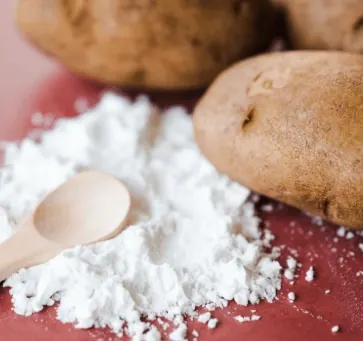
Potato resistant starch has no Tolerable Upper Intake Level either, for the same structural reason as inulin: nobody has assembled the breadth of dose-response toxicity data that a UL requires. The human studies on resistant starch that exist, several of which are detailed on the ingredients page, were designed to look at metabolic outcomes like glucose and insulin response, or at digestive effects like stool frequency, at doses far above the 100 mg Sodatide provides. None of them were designed as, or substitute for, a formal upper-limit safety review.
The practical upshot is similar to inulin: at 100 mg per capsule, Sodatide’s resistant starch dose is a small fraction of what any published study has tested at all, which makes the absence of a formal ceiling a non-issue in practice at this amount, whatever the regulatory status of the ingredient in general.
Probiotic strains
Why probiotic strains don’t get a UL either
Live bacterial strains raise a different problem than fibers do: a UL framework built around nutrient chemistry doesn’t map cleanly onto a living organism in the first place.
A Tolerable Upper Intake Level is built for substances with a dose-response curve: more of the substance, more of a defined effect, up to a point. A live bacterial strain behaves differently once inside the body, colonizing, interacting with existing gut flora and the immune system, and in most cases simply passing through rather than accumulating. That is part of why the NIH Office of Dietary Supplements notes that listing colony-forming units (CFU) on a probiotic label is voluntary in the first place, and that benefits and risks both depend on the specific strain and amount used, not on weight alone (NIH Office of Dietary Supplements).
Sodatide’s label does not publish a CFU count for its 36 mg blend of B. infantis, C. butyricum and A. muciniphila, and no regulatory body has set a UL for any of those three species at any dose. Both facts flow from the same underlying reality: a formal upper limit requires standardized dosing and toxicology data that simply has not been generated for these organisms. That is a different question from day-to-day safety, which the separate NCCIH guidance covered in our post on probiotic safety and weakened immune systems addresses directly.
The distinction
Tolerance study vs. upper limit: why the difference matters
It is tempting to treat “tested up to 10 g with only mild symptoms” as the same thing as “safe up to 10 g by law.” They are not the same claim.
| Question | A tolerance study | A Tolerable Upper Intake Level |
|---|---|---|
| Who sets it | The study’s own authors, in one publication | A national body, such as the National Academies, after reviewing the whole literature |
| What it measures | Comfort and mild symptoms in a specific, usually small, study group | The point above which real harm becomes more likely across the general population |
| How many studies back it | Often just one | Typically many, assembled and weighed together |
| Does it carry legal weight on a label | No, it is background evidence | Yes, it is the basis for a % Daily Value ceiling where one exists |
Treating a single tolerance study as though it were a government ceiling overstates what that one study can tell you. Treating the absence of a UL as proof an ingredient is somehow more dangerous understates the real reason it has none, which is usually that nobody has funded the scale of research a UL review requires, not that red flags were found and ignored.
Our take
Our verdict: does “no UL” change how you should read this label?
Not dramatically. The absence of a Tolerable Upper Intake Level for chicory inulin, potato resistant starch and the three named strains is normal for this category of ingredient, not a sign that something was hidden. Most individual fibers and most probiotic species are in the same regulatory position.
What the † mark should do is reset your expectations about the label itself. It cannot tell you a percentage of a government target, because no target exists on either end, floor or ceiling, for these three ingredients. The tolerance data that does exist, like the 10 g inulin finding above, is useful context for a 211 mg capsule, but it is a study finding, not a regulation.
See how Sodatide’s actual doses stack up against the research doses, UL question aside, in Sodatide doses vs. research.
Sources
Sources
We opened and checked each source before citing it, and verified the PMID below against PubMed directly. Links go to the journal, PubMed or the federal fact sheet.
- Bonnema AL, Kolberg LW, Thomas W, Slavin JL, Journal of the American Dietetic Association 2010;110(6):865-868, PMID 20497775: “Gastrointestinal tolerance of chicory inulin products”. Open source
- National Institutes of Health, Office of Dietary Supplements. Probiotics: Fact Sheet for Health Professionals. Open source
- Sodatidenow. Sodatide Supplement Facts label transcription. Open source